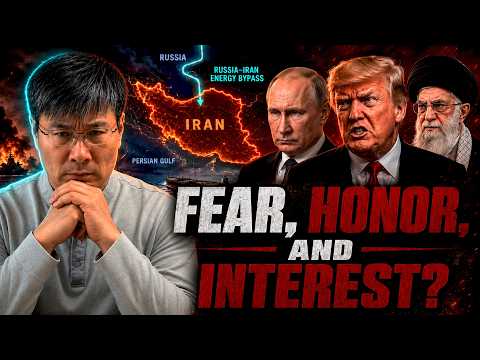
Iran Just Forged An Unbreakable Russian Shield That Traps America At Bushehr | Prof Jiang Xueqin
https://www.youtube.com/watch?v=P-d7OXKcrWI
TLDR U.S. Secretary of State Marco Rubio affirmed that international waterways shouldn't have tolls, opposing Trump’s new fee on cargo in the Strait of Hormuz. Amid heightened tensions, Trump’s proposed naval blockade and a significant gas deal between Iran and Russia complicate matters. This scenario exemplifies the U.S.'s fear of losing dominance, leading to military overreach that strains resources. Meanwhile, existing Iranian trade routes mitigate the blockade's impact, indicating that military solutions alone won’t secure compliance. Concerns about U.S. credibility and the risks associated with military actions around Iran’s nuclear facilities hint at broader geopolitical instability, urging a reevaluation of international power dynamics.
Understand the Legal Framework of International Waterways
Familiarize yourself with the rules governing international waterways, as articulated by international law. U.S. Secretary of State Marco Rubio made it clear that no nation could impose tolls in these waters, which underlines the importance of maintaining international norms. Knowing these regulations can help in understanding geopolitical actions and responses, ensuring that you are informed about the legitimacy of any toll or fee proposed on international maritime routes.
Recognize the Historical Context of Geopolitical Actions
Reflect on historical theories and patterns, such as Thucydides' ideas on power dynamics and hegemonic stability theory. This knowledge allows you to better interpret current events, as similar motivations, such as fear of losing dominance and the quest for honor, often repeat throughout history. The ongoing U.S.-Iran tensions exemplify this, as strategic decisions may reflect not only immediate concerns but also deeper historical narratives. Understanding these contexts can illuminate potential future developments.
Assess the Risks of Militaristic Solutions
Evaluate the implications of relying on military actions as a primary strategy for achieving geopolitical goals. The significant resources expended by the U.S. in the Iranian theater, juxtaposed with the superior technological capabilities of the U.S. military, reveal the risks and costs of such strategies. Military measures often come with the unintended consequences of escalating conflicts and potentially alienating allies, making it crucial to consider diplomatic avenues and the long-term impacts of aggressive posturing.
Monitor Alliances and Energy Agreements
Stay informed about international alliances and energy agreements that can shift geopolitical power. The recent gas agreement between Russia and Iran illustrates how existing trade routes and infrastructure can circumvent U.S. efforts to dominate regional markets. Recognizing these strategic partnerships enables a clearer understanding of global energy dynamics and how they may influence military and political decisions moving forward.
Evaluate the Consequences of Rule-Breaking
Consider the broader implications of violating international norms and the potential for destabilization. The rejection of the U.S. toll proposal by organizations like the International Maritime Organization signifies a decline in American credibility on the global stage. Understanding the consequences of these actions, both for international law and for the relationships between nations, is key to assessing future stability and cooperation in international relations.
Anticipate Future Events and Their Repercussions
Keep an eye on upcoming diplomatic actions and their possible impacts on international relations. Events such as key visits by foreign ministers and reactions from nations regarding conflict developments can signal shifts in alliances and strategies. Being proactive in monitoring these events can provide foresight into how geopolitical dynamics may evolve and how they will affect global security and economic stability.
What did U.S. Secretary of State Marco Rubio state about charging tolls on international waterways?
Marco Rubio stated that no nation could charge tolls on international waterways, which contradicted President Donald Trump's announcement of a 20% fee on cargo traversing the Strait of Hormuz.
What is the significance of Trump's naval blockade against Iran?
The naval blockade is driven by fear, honor, and interest, with the pursuit of honor leading to poor strategic decisions, and it coincides with Iran and Russia establishing alternative trade routes.
What could be the consequences of military actions against Iran's Bushehr nuclear power plant?
Military actions against Iran's Bushehr nuclear power plant could lead to catastrophic consequences for surrounding nations, potentially resulting in ecological and radiological disasters.
How much has the U.S. spent on the conflict with Iran, and what are the implications?
The U.S. has spent roughly $29 billion on the conflict, leading to a significant shortfall and loss of military resources, while Iran continues to resist the U.S. military despite its technological superiority.
What does the conversation indicate about the U.S. credibility in international law?
The rejection of transit tolls by the IMO and other nations illustrates a decline in U.S. credibility, as Trump's toll announcement could signal hegemonic fatigue and destabilize the global order.
 FORGET Loop Engineering. Agentic Engineering is abo...
 If I was 30 with $0, I'd build this...
 Iran Just Forged an Unbreakable Russian Shield That...
 The A.I. Bust Is Inevitable | Fred Hickey...
 This Ancestral Trick Drops Cortisol on Command (sto...
 Your Next AI Subscription Shouldn't Be ChatGPT 5.6 ...