Ex Market Maker: “we Manipulate Markets, Take Your Stops & Grab Liquidity....We Have Toâ€
https://www.youtube.com/watch?v=Uhil2DFhhD8
TLDR Institutional trading operates under strict risk management and liquidity needs, contrasting sharply with retail trading that often lacks support and faces pressure for quick results. While institutional traders benefit from a structured environment and can hedge effectively, retail traders need to cultivate patience and learn continuously to adapt strategies, especially in the evolving landscape of options trading. The conversation also highlights the importance of mindfulness in managing the psychological aspects of trading, as well as the necessity for resilience and education following losses.
Understand the Institutional Perspective
Trading from an institutional perspective involves distinct practices and strategies that retail traders often overlook. Institutions operate within regulated frameworks, where they manage liquidity and risks, especially in volatile markets like options. Unlike retail traders, who may chase quick gains through misleading advice from 'gurus,' institutional traders systematically analyze market behaviors and trends, utilizing substantial capital for hedging and strategy implementation. Gaining insight into this institutional framework can help retail traders appreciate the complexities of the market and shift their focus from seeking shortcuts to adopting informed strategies that prioritize risk management.
Embrace Mindfulness and Self-Awareness
In the high-pressure world of trading, maintaining emotional balance is crucial for long-term success. Traders can benefit significantly from mindfulness practices to enhance self-awareness and manage stress responses—particularly the brain's amygdala, which affects decision-making during high-stress scenarios. By identifying personal triggers and implementing techniques such as taking breaks after losses or practicing breathing exercises, traders can maintain clarity and composure, improving their decision-making capabilities. Mindfulness isn't just a technique; it is an essential part of developing resilience and mental strength in trading.
Commit to Continuous Learning
Trading is not a one-time venture; it requires a commitment to continuous learning and adaptation. Many novice traders mistakenly believe that success is a quick outcome, often discouraged when faced with challenges. Instead, traders should set realistic timelines for mastery—such as a three-year goal—and remain open to evolving their knowledge through practice and education. Engaging with communities, learning from experienced traders, and reflecting on personal experiences form the foundation for growth. By embracing the journey of being a perpetual student, traders can adapt their strategies to an ever-changing market landscape.
Recognize the Importance of Hedging
Hedging is a fundamental trading strategy that protects investments against market volatility, analogous to purchasing insurance for assets. Market participants have learned valuable lessons from past financial crises, highlighting the necessity of risk mitigation for both institutional and retail traders. By utilizing options and other derivatives, traders can safeguard their portfolios against downturns and unforeseen circumstances. Understanding different hedging strategies and their implementation becomes critical in developing a robust trading plan, ensuring that traders can navigate turbulent market conditions effectively.
Adapt Your Strategies to Market Dynamics
The ability to adapt trading strategies according to market conditions is essential for sustained success. With the rise of new trading instruments such as options and the evolving nature of market dynamics, traders must remain vigilant and responsive. Continuous education on how these new tools influence the market is critical for maintaining efficiency and leveraging new opportunities. Developing an adaptive trading mindset, where strategies are regularly reviewed and adjusted based on current market trends, will prepare traders for both challenges and opportunities that arise, ultimately enhancing their market performance.
What are the key differences between institutional and retail trading?
Institutional trading operates with substantial capital and risk management while retail trading relies solely on individual performance. Institutional traders often have structured support and salaries, while retail traders face pressure and are motivated to trade every day without consistent income.
How does mindfulness impact trading performance?
Mindfulness techniques are essential for managing emotional responses in trading. Recognizing personal triggers, taking breaks after losses, and focusing on mental clarity can improve trading decisions.
What role do options play in modern trading?
Options are crucial for portfolio protection, helping traders hedge against risks. The rise in options flows has improved consistency in trading, and traders are increasingly using options to influence market movements.
What challenges do traders face when transitioning from institutional to retail trading?
Traders moving from institutional to retail often struggle with adapting to managing their own capital without a structured environment. There is a learning curve, and mastery in trading takes time, making patience vital.
What are the considerations for hedging in trading?
Traders need to constantly hedge their portfolios, especially during chaotic market opens and closings. Perfect hedging is difficult, and the risks of improper hedging can lead to significant issues.
How important is continuous education in trading?
Continuous learning is crucial in trading; traders should always seek knowledge to adapt to changing market conditions and improve their strategies.
What insights can be gained from past market crashes?
Past crash experiences, such as the 1987 crash and the 2008 financial crisis, highlight the importance of hedging investments and learning from failures to maintain a positive mindset.
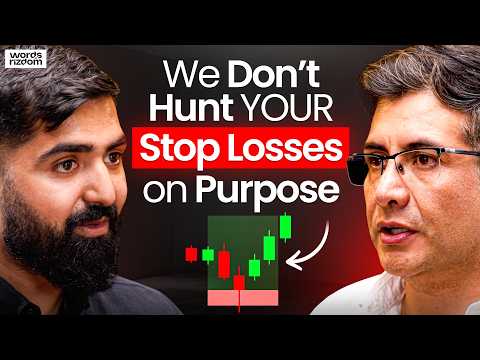 Ex-Market Maker: “We Manipulate Markets, Take You...
 ...
...
 ...
...
 Agentic Engineering Benchmarks: How I RANK Astra, F...
 Learn 95% of Evals in 38 Minutes...
 How to Generate Leads on Autopilot With AI...